
How long a visa photo is valid and when you need a new one
When it comes to international travel, a visa photo may seem like a small detail, but it can make or break your application. Imagine getting everything right—your documents, forms, and payments—only to be rejected because of an outdated or invalid photo. Frustrating, right? In this detailed guide, we’ll break down how long a visa photo remains valid, when you need a new one, and all the rules you should know to avoid costly delays. Let’s dive in.
Understanding Visa Photo Validity
Visa photo validity is a crucial aspect of the application process, as it determines whether your submitted image accurately reflects your current appearance. Immigration authorities use these photos to identify applicants, so having an up-to-date image is not just a formality—it’s a security requirement. If your photo is outdated, even slightly, it could lead to delays or outright rejection of your visa application. Many travelers underestimate this, thinking a photo from a year ago is fine, but most countries are stricter than that.
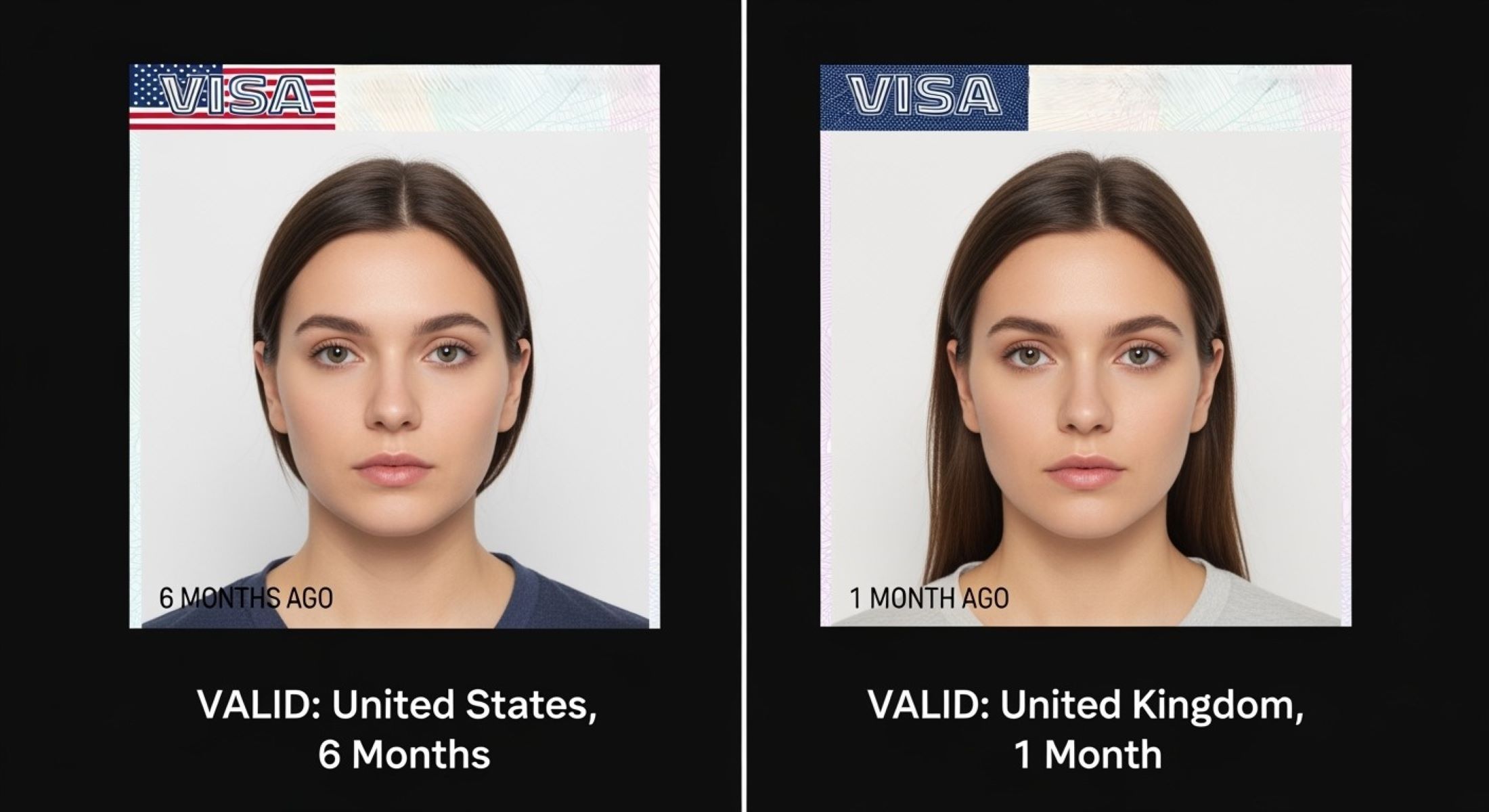
The timeframe for what counts as “recent” varies widely from country to country. For example, the United States generally requires photos taken within the last six months, ensuring that any changes in your hairstyle, facial hair, or other features are captured. Meanwhile, some European countries, like the United Kingdom, demand photos taken within just one month of your application. This difference can be confusing for travelers, so it’s essential to check the specific requirements for your destination before submitting any documents.
Beyond just the timeframe, the conditions under which the photo is taken also affect its validity. Photos must meet technical standards such as proper lighting, neutral background, and correct sizing. Even a photo taken within the acceptable period can be rejected if it’s blurry, too dark, or has shadows on the face. Many embassies provide detailed specifications, including whether the subject should have a neutral expression, whether glasses are allowed, and the exact pixel dimensions for digital submissions. Ignoring these technical requirements can make your photo invalid regardless of how recent it is.
Finally, visa photo validity is tied to the applicant’s current physical appearance. Changes such as growing a beard, significant weight fluctuation, new hairstyles, or medical procedures that alter facial features can make older photos unreliable. Immigration authorities want to be confident that the person applying matches the photo exactly. In practice, this means that even if your photo technically falls within the allowed timeframe, you should consider updating it if your appearance has changed noticeably. Keeping your visa photo current ensures a smoother application process and reduces the risk of unnecessary delays or complications.
Why Visa Photos Have Expiration Rules
Ever wondered why countries insist on recent visa photos? There’s a very practical reason behind it, and understanding this can help you avoid mistakes during your application process. Here’s a detailed look at why visa photos have expiration rules:
- Facial Features Change Over Time: Your appearance is not static. Even small changes like a new haircut, growing or shaving facial hair, changes in weight, or natural aging can make your face look different from an older photo. Immigration authorities need a photo that closely represents your current look so they can confidently match it to your identity during border checks.
- Accurate Identity Verification: The primary purpose of a visa photo is to help immigration officers identify you quickly and reliably. An outdated photo may not reflect recent changes in your appearance, which could make verification difficult and raise unnecessary flags. Updated photos ensure that the person crossing the border is the same as the one in the visa application.
- Enhanced Security Measures: Countries take security very seriously, and having current images helps reduce the risk of identity fraud and impersonation. A recent photo allows authorities to cross-check facial recognition systems and detect fraudulent attempts to use someone else’s identity. Outdated photos could compromise security measures, making it easier for illegal activities to go unnoticed.
- Consistency Across Documentation: Visa photos often need to match other official identification documents such as passports, national IDs, and biometric records. Expired or old photos can create inconsistencies, which may cause your application to be delayed or even rejected. Keeping photos current ensures alignment across all forms of documentation.
- Compliance with International Standards: Most countries follow international guidelines for travel and identification security, which specify that photos should be updated regularly. Adhering to these standards helps maintain a uniform system of identification, making international travel smoother for everyone.
- Avoiding Delays and Rejections: Using an expired or outdated photo can result in processing delays, extra fees, or even outright rejection of your visa application. By submitting a photo that meets current validity requirements, you save time, money, and unnecessary stress.
- Reflects Professionalism and Accuracy: Submitting a valid and current photo signals that you have carefully followed the visa application rules. It demonstrates attention to detail and reduces the likelihood of errors that could slow down the approval process.
General Visa Photo Validity by Country
| Country | Visa Photo Validity | Photo Size | Background & Expression | Special Notes |
| USA | Within 6 months | 2×2 inches | White background, neutral expression | No hats or glasses; photo must be in color; head centered and facing camera |
| UK | Within 1 month | 35×45 mm | Light gray or cream background, neutral expression | Head fully visible; avoid shadows; digital photos allowed for online applications |
| Canada | Within 6 months | 35×45 mm | Plain white background, natural lighting | No filters or retouching; glasses allowed only if necessary for medical reasons |
| Australia | Within 6 months | 35×45 mm | Plain background, no shadows, neutral face | Digital or printed photos accepted; avoid hair covering eyes |
| Schengen Area | Within 6 months | 35×45 mm | Light-colored background, sharp focus | Two identical photos required; facial features clearly visible |
| India | Within 6 months | 35×45 mm | White or light-colored background, neutral expression | Ears must be visible; no accessories or sunglasses; hair must not cover forehead |
| China | Within 6 months | 33×48 mm | Plain light background, neutral face | Digital photo preferred for eVisa; no smiling; head straight and centered |
| Japan | Within 6 months | 35×45 mm | Plain background, centered face, neutral expression | Avoid shadows; ensure proper lighting; digital format allowed for online submission |
| Germany | Within 6 months | 35×45 mm | Light gray or white background, neutral expression | Two identical photos recommended; must comply with ICAO standards |
Signs You Need a New Visa Photo
Even if your visa photo technically meets the required validity period, there are several situations where it’s wise—or even necessary—to take a new one. The first and most obvious reason is if your appearance has changed. Small or significant changes such as growing or shaving a beard, changing your hairstyle or hair color, gaining or losing a noticeable amount of weight, or undergoing facial surgery can make your old photo unreliable. Immigration officers rely on the photo to verify your identity, and even minor differences can create unnecessary delays or raise questions at the border.
Another common reason to update your visa photo is if the photo is older than the allowed timeframe, regardless of whether you still look similar. Many embassies strictly enforce recency rules, and a photo taken two or more years ago can be grounds for rejection. Even if your face hasn’t changed much, submitting an outdated photo signals non-compliance with official requirements and can complicate your application process. Staying within the required timeframe is a simple way to avoid unnecessary stress.
The quality of the photo is equally important. A blurry, low-resolution, overexposed, or underexposed photo can easily lead to rejection, even if it was taken recently. Shadows, red-eye, or any distractions in the background can also make the image unacceptable. Authorities need a clear, sharp photo to accurately match your face to your identity, so poor-quality images—even those taken professionally years ago—should be replaced to meet modern standards.
Finally, wrong size or format is a common reason for rejection that’s easy to avoid. Each country has precise size specifications, and submitting a photo that is slightly too large, too small, or in the wrong file format can result in immediate disqualification. Whether it’s a printed photo for a traditional visa application or a digital image for an eVisa, adhering to the exact specifications is essential. Ensuring your photo meets all size and format requirements is a small step that can save you a lot of time and hassle.
How to Check If Your Visa Photo Is Still Valid
Before submitting your visa application, it’s crucial to make sure your photo meets all the requirements. A quick check can save you from delays, rejections, or extra costs. Here’s a detailed checklist to help you determine if your visa photo is still valid:
- Review the embassy’s or consulate’s guidelines for photo validity: Every country has specific rules about how recent your photo must be. Some require it to be taken within six months, others within just one month. Always check the official website or documentation to avoid surprises.
- Verify the date your photo was taken: Even if your appearance hasn’t changed much, submitting a photo older than the allowed period can lead to rejection. Keep track of when your photo was captured, and if it’s nearing or past the limit, consider taking a new one.
- Compare your current appearance with the photo: Changes in hairstyle, facial hair, glasses, weight, or any surgical alterations can make an old photo inaccurate. If you notice visible differences, it’s time for an updated image to ensure proper identification.
- Check photo quality: Ensure the photo is clear, high-resolution, and free from blurriness, shadows, red-eye, or over/underexposure. A photo with poor quality can be as problematic as one that is too old.
- Confirm the size and dimensions: Every country has strict size requirements, whether it’s a printed photo or a digital submission. Incorrect dimensions, cropping, or scaling can lead to immediate disqualification.
- Inspect the background: Most countries require a plain, light-colored background with no patterns, objects, or shadows. A distracting or incorrect background can make the photo invalid, even if the face is clearly visible.
- Ensure proper facial expression: Many countries demand a neutral expression without smiling, teeth showing, or raised eyebrows. Check the guidelines for your destination country to comply with these rules.
- Evaluate lighting and exposure: Your face should be evenly lit, without harsh shadows or overexposed areas. Proper lighting ensures that facial features are clearly visible for identification purposes.
- Check for accessories and attire compliance: Remove hats, sunglasses, or any items covering your face unless allowed for religious or medical reasons. Clothing should contrast with the background but not distract from your face.
Difference Between Passport and Visa Photo Validity
| Aspect | Passport Photo | Visa Photo | Validity Considerations | Additional Notes |
| Validity Period | Usually valid for the duration of the passport (often 5–10 years) | Often needs to be recent (e.g., within 6 months) | Passport photos may remain valid for several years; visa photos must reflect current appearance | Even if your passport photo is valid, it may not meet the visa’s recency requirements |
| Size Requirements | Standardized per country (varies slightly) | May differ depending on the visa country | Visa photos often have stricter size specifications than passport photos | Always check embassy guidelines for exact pixel dimensions, print size, and cropping rules |
| Background & Lighting | Plain background, usually light or white; moderate lighting | Strict background and lighting requirements (often white/light) | Visa photos usually require precise background and lighting for facial recognition | Passport photos may be more forgiving, but visa photos are strictly regulated for identification |
| Usage | Identification for travel, airport checks, and government ID | Solely for visa application and approval process | Passport photos are reused for multiple purposes; visa photos are used only for the specific visa | Using a passport photo for visa may lead to rejection if it doesn’t meet visa-specific rules |
| Expression & Accessories | Neutral expression recommended; glasses allowed; minimal head covering | Usually strictly neutral expression; no glasses unless medically required; no hats | Visa photos often have stricter rules on facial expression and accessories | Some countries require two identical visa photos with strict facial visibility; passport photos have fewer restrictions |
Common Mistakes That Lead to Visa Photo Rejection
One of the most common mistakes travelers make is using an old photo that falls outside the embassy’s required timeframe. Even if you haven’t changed much, a photo taken too long ago can lead to automatic rejection. Immigration officers need a current image to ensure accurate identification, and submitting an outdated photo can signal non-compliance with the visa rules. It’s always safer to take a fresh photo that clearly represents your current appearance.
Another frequent issue is incorrect size or dimensions. Each country has precise specifications for visa photos, and even minor deviations can cause your application to be returned. Some embassies require specific pixel dimensions for digital submissions, while others have exact print sizes for physical photos. Paying attention to these details—down to the millimeter—can prevent unnecessary delays and make the submission process much smoother.
Distracting backgrounds and improper lighting are also major culprits for photo rejection. Patterns, shadows, furniture, or other objects in the background can obscure your facial features, making it difficult for immigration officers to verify your identity. Similarly, harsh lighting, overexposure, or uneven shadows can render a photo unacceptable. A clean, plain background with soft, even lighting ensures that your face is clearly visible and your application meets all official requirements.
Finally, accessories and facial expressions are often overlooked. Hats, sunglasses, heavy jewelry, or anything covering part of your face are usually prohibited. Additionally, some countries require a neutral expression without smiling, while others allow a slight smile. Failing to comply with these rules is a simple mistake that can lead to photo rejection. Ensuring that your face is fully visible and expression-compliant is an easy way to avoid unnecessary complications.